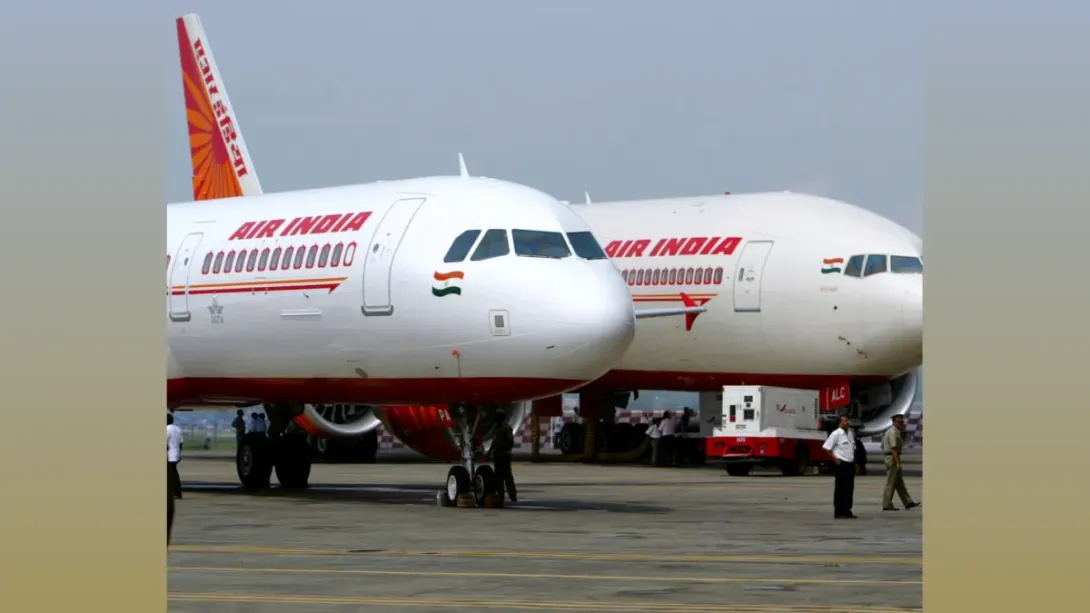
A long-haul aircraft operated by Air India made a precautionary return to New Delhi after pilots detected a technical irregularity during flight operations. The aircraft, an advanced Airbus A350, was reportedly en route to an international destination when the crew decided to turn back as part of standard safety procedures. Passengers landed safely without incident, while engineering teams began immediate inspections. Aviation analysts note that such precautionary returns reflect the aviation industry’s strict safety culture. The event also highlights the operational challenges airlines face while expanding modern fleets and maintaining reliability in an increasingly competitive global aviation market.
Mid-Air Alert Prompts Precautionary Return
Air India confirmed that one of its Airbus A350 aircraft returned to New Delhi shortly after takeoff following the detection of a technical issue. According to aviation officials, the flight crew chose to abort the journey and return to base as a preventive measure.
Modern commercial aviation relies heavily on advanced monitoring systems capable of identifying mechanical irregularities in real time. When such alerts occur, standard operating procedures often require pilots to prioritize passenger safety by returning to the nearest suitable airport.
The aircraft landed safely in New Delhi, and all passengers disembarked normally while airline engineers initiated technical evaluations.
The Airbus A350: A Flagship Aircraft in Modern Aviation
The Airbus A350 is widely regarded as one of the most advanced wide-body aircraft currently in commercial service. Built with lightweight composite materials and equipped with next-generation engines, the aircraft offers improved fuel efficiency and long-range capability.
Airlines around the world have increasingly adopted the A350 to operate high-capacity international routes. For Air India, the aircraft represents a central component of its fleet modernization strategy as the airline seeks to strengthen its global network.
Despite their advanced engineering, even modern aircraft occasionally experience technical alerts that require immediate attention.
Air India’s Ongoing Fleet Modernization
The incident occurs during a period of major transformation for Air India. The airline has undertaken an ambitious expansion plan aimed at upgrading its fleet and improving service standards.
In recent years, Air India has announced large aircraft orders and initiated modernization programs to enhance operational efficiency. These investments, valued at billions of rupees, are intended to position the carrier as a stronger competitor in international aviation markets.
Introducing new aircraft models such as the Airbus A350 is a critical part of this strategy, enabling the airline to operate long-distance routes with improved passenger comfort and lower fuel consumption.
Aviation Safety Protocols and Industry Standards
Aviation experts emphasize that precautionary returns are not uncommon in the airline industry. When onboard systems detect irregularities, pilots and airline operations teams must follow strict safety protocols.
These procedures are designed to eliminate risk before minor technical issues escalate into more serious mechanical concerns. In many cases, the problem identified during flight may later prove to be minor, but returning to the departure airport ensures thorough inspection.
Regulatory authorities and airline operators maintain rigorous safety standards to protect passengers and maintain confidence in air travel.
Operational and Financial Implications
While safety remains the top priority, unscheduled flight returns can create operational challenges for airlines. Delays, aircraft inspections, and passenger accommodations may temporarily disrupt flight schedules.
For large carriers such as Air India, such events can also carry financial implications, including additional operational costs and logistical adjustments. However, aviation analysts note that prioritizing safety ultimately protects an airline’s long-term reputation and customer trust.
In a highly competitive global aviation industry, maintaining consistent reliability remains essential for sustaining brand credibility.
A Reminder of Aviation’s Safety-First Culture
The Air India A350’s return to New Delhi ultimately underscores the aviation sector’s unwavering commitment to safety. Pilots, engineers, and airline operations teams operate within a system designed to detect and respond to potential risks quickly and effectively.
For passengers, such precautionary actions may cause temporary inconvenience but serve as evidence of a robust safety culture that defines modern aviation.
As Air India continues its transformation and fleet expansion, maintaining this safety-first approach will remain central to the airline’s long-term growth and international reputation.
Comments