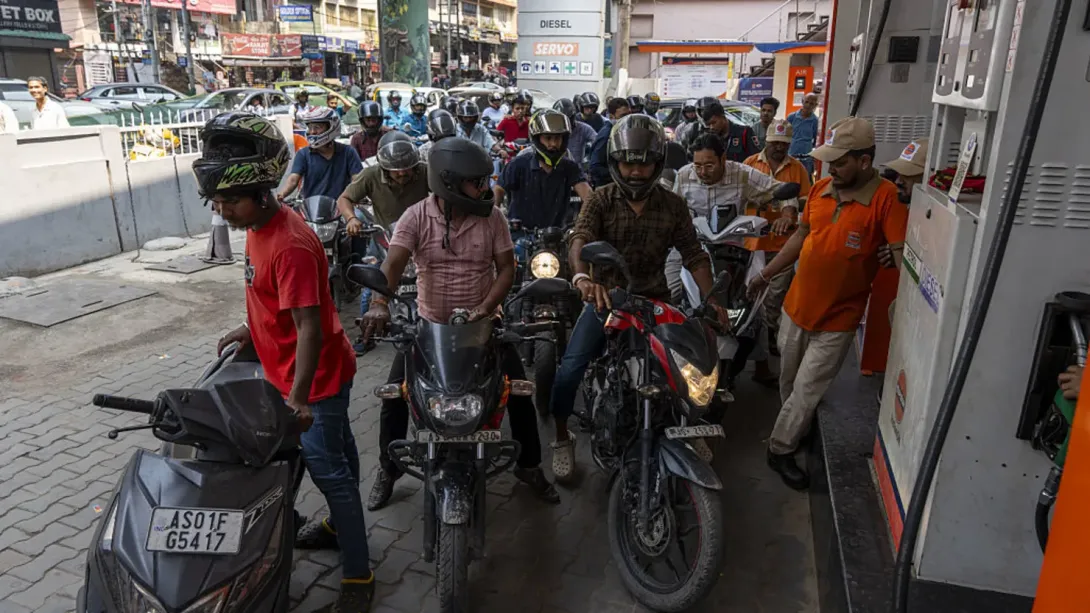
In response to rising international crude oil prices, the Government of India has announced a reduction in excise duties on petrol and diesel to ease the burden on consumers and businesses. The decision reflects growing concerns about inflationary pressures triggered by volatile energy markets. By lowering indirect taxes on fuel, policymakers aim to stabilize domestic retail prices, support economic activity, and contain transportation costs across sectors. Analysts suggest the move could provide short-term relief for households while also helping industries manage operational expenses. However, the decision may have implications for fiscal revenues as the government balances economic stability with budgetary discipline.
Government Moves to Stabilize Fuel Prices
India has reduced excise duties on petrol and diesel in a strategic attempt to mitigate the economic impact of rising global crude oil prices. The decision comes at a time when international energy markets have experienced significant volatility, pushing up the cost of imported oil for major consuming nations.
As one of the world’s largest importers of crude oil, India remains highly sensitive to global price movements. A surge in international oil prices can quickly translate into higher domestic fuel costs, affecting transportation, logistics, and manufacturing.
By lowering excise duties, the government aims to reduce the immediate price burden on consumers while maintaining economic stability.
Understanding Excise Duty in Fuel Pricing
Excise duty represents a significant component of the retail price of petrol and diesel in India. The tax is levied by the central government and contributes substantially to national revenue.
When global oil prices increase sharply, governments often face a policy dilemma: maintain tax levels and risk higher inflation, or reduce taxes to protect consumers while accepting lower fiscal revenue.
In this instance, policymakers have chosen to prioritize price stability, reflecting concerns that rising fuel costs could ripple through the broader economy.
Impact on Inflation and Household Budgets
Fuel prices have a direct and indirect impact on inflation. Petrol and diesel are essential inputs for transportation networks, agricultural operations, and industrial supply chains.
Higher fuel prices typically lead to increased freight costs, which can raise the price of goods ranging from food products to consumer electronics. By cutting excise duties, the government aims to soften these inflationary pressures.
For households, lower fuel prices may translate into reduced commuting expenses and potentially slower increases in the cost of everyday goods.
Implications for Businesses and Logistics
The decision is also expected to provide relief to industries that depend heavily on transportation and fuel consumption. Logistics companies, airlines, and manufacturing firms often experience significant cost fluctuations when fuel prices rise.
Lower excise duties could help businesses manage operational expenses more effectively, particularly at a time when many sectors are still adjusting to broader economic uncertainties.
From a macroeconomic perspective, stabilizing fuel costs can support business confidence and encourage investment across multiple industries.
Fiscal Trade-Offs for the Government
While the tax reduction may benefit consumers and businesses, it also carries fiscal implications. Fuel taxes represent an important source of government revenue used to fund infrastructure development, welfare programs, and public services.
Reducing excise duties therefore involves a trade-off between immediate economic relief and potential pressure on government finances.
Economists note that policymakers must carefully balance these competing priorities, especially during periods of global economic uncertainty.
Global Energy Market Dynamics
The government’s decision reflects broader developments in global energy markets. International crude oil prices have been influenced by geopolitical tensions, supply constraints, and fluctuating demand from major economies.
Such factors often create unpredictable price movements that affect oil-importing countries like India. Managing these external shocks requires a combination of fiscal measures, energy diversification strategies, and long-term policy planning.
India has increasingly explored renewable energy investments and alternative fuels as part of a broader strategy to reduce dependence on imported crude oil.
Outlook for India’s Energy and Economic Policy
The reduction in excise duties on petrol and diesel underscores the government’s willingness to intervene when global energy prices threaten domestic economic stability. While the move offers immediate relief, long-term solutions will likely focus on strengthening energy security and expanding renewable energy capacity.
For policymakers, the challenge lies in balancing consumer welfare, fiscal discipline, and sustainable energy policy.
As global oil markets remain unpredictable, India’s approach to fuel taxation and energy diversification will continue to play a critical role in shaping the country’s economic trajectory.
Comments